

As an international student moving to the United States some seven odd years ago, I never thought I would ever enroll for a PhD in Anime and Manga Studies (Literature). As a young literary scholar in India, I repeatedly heard that “true Literature” included literary theory, epic poems such as Dante’s Divine Comedy or Milton’s Paradise Lost, or canonized literary works such as Dostoevsky’s Crime and Punishment or Orwell’s 1984. Never had I imagined I would take the popular culture route and even more so the graphic novel route in my scholarly endeavors. My introduction to anime and manga was a chanced encounter, a happy misunderstanding wherein I took a class I had assumed would incorporate dystopian science fiction, totally missing the “anime and manga” part of the course description.
The first day of class, I felt like a fish out of water because I had never in my twenty years in school (high school and college) thought that “cartoons” would be a teaching medium at an academic institute. Skip to six years after that fateful encounter, I have over two hundred pages in my scholarly manuscript and will soon be defending my dissertation wherein I examine the gender roles of women (both real and fictional) within the field of Japanese anime and manga. After having spent the last five years researching the field, I can strongly advocate for how the graphic novel has been unjustly frowned upon by the gatekeepers of literary canons. The form of Japanese anime and manga is not only a valuable artifact of the Japanese culture but also provides critical insight into the social, political, and economic goings-on in Japan. As a scholar of the form in the west, I realized how scholarship surrounding this form is lacking, which made my resolve to write a book-length dissertation on said topic even stronger.
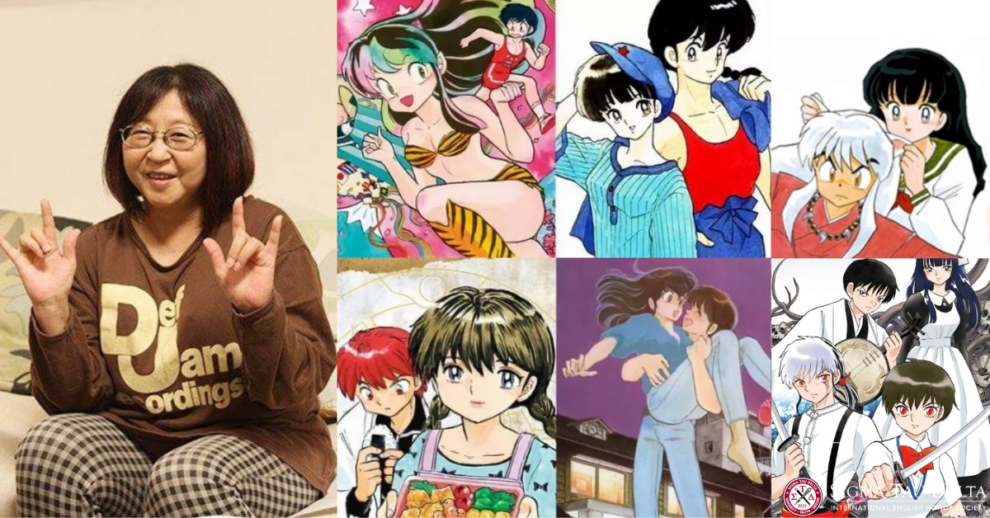
Manga is said to be a form that has rich narratives, unique art styles and artwork, and often can emotionally move the consumers of the form. Manga, however, has only recently been considered as a serious literary form worthy of scholarly inquiry. Manga is far from being a pastime form of entertainment, if anything, it bridges literature, art, and cultural studies. Manga is comparable to novels or epic poems being episodic in nature—allowing for longer time spent with characters within the manga. The mangaka I am specifically working with is Rumiko Takahashi—who is a worthy candidate for scholarly inquiry given the variety of works she is accredited with. Takahashi is also the most popular mangaka of the form given that she debuted writing for shonen (boys’) manga magazines—a feat uncommon for women when Takahashi emerged in the publishing industry. Her works and life serve as a critical commentary on the social aspects of the Japanese society especially those of gendered divisions of labor. Takahashi also changes the status quo of gendered power dynamics as reflected in the popular culture of the Japanese society—through the creation of powerful female characters that have agency over their bodies and are not merely subject to the male gaze.
Having said that though, not just Takahashi but also other popular names within the industry are credited with works that engage with larger thematic concerns, both local to Japan and globally. As a master’s student when I first encountered the work of Hayao Miyazaki, specifically Nausicaä of the Valley of the Wind, I realized this was no ordinary “comic book”—Miyazaki’s work in fact touches upon themes that are even more so relevant today despite the manga being written and published in the 1980s through 1990s. Nausicaä of the Valley of the Wind talks about the relationship between humanity and nature and Earth’s process of healing and detoxifying itself from war induced pollution. Nausicaä the titular protagonist is also depicted as a pacifist, hates the idea of war, choosing instead to resolve the problem (earth and earthly creatures’ attack on humans) to detoxify nature, in non-violent ways.
Manga (comic books) are also literature, in fact they are so much more than literature—they can teach you a way of life and inspire readers. In honoring manga as a literary form, not only can we broaden our cultural understanding of Japan and the scope of cultural and interdisciplinary studies but also broaden our understanding of what constitutes global literature. Manga is not just a valuable form to literature but to the arts in general given the multimedia aspect of the form and one that is worthy of serious academic and literary (discourse) considerations.
 Nikita D’Monte
Alpha Psi Nu Chapter
The University of Texas at Dallas, Richardson, TX
Sigma Tau Delta
Sigma Tau Delta, International English Honor Society, was founded in 1924 at Dakota Wesleyan University. The Society strives to
- Confer distinction for high achievement in English language and literature in undergraduate, graduate, and professional studies;
- Provide, through its local chapters, cultural stimulation on college campuses and promote interest in literature and the English language in surrounding communities;
- Foster all aspects of the discipline of English, including literature, language, and writing;
- Promote exemplary character and good fellowship among its members;
- Exhibit high standards of academic excellence; and
- Serve society by fostering literacy.
With over 900 active chapters located in the United States and abroad, there are more than 1,000 Faculty Advisors, and approximately 9,000 members inducted annually.
Sigma Tau Delta also recognizes the accomplishments of professional writers who have contributed to the fields of language and literature.


1
I agree with this. I am using the term “sequential art” as Wil Eisner coined, or “graphic novel.” Manga as well, as there is a lot of imaginative narratives. And that is the only difference between sequential art and other narrative forms is the choice of how to tell a story. It is right up there with prose, stage or screenplay as a vital mode for storytelling.
My eyes opened with The Watchmen by Alan Moore, and their League of Extraordinary Gentlemen and I haven’t looked back.